
Dupuytren’s Center of California
Welcome to the Dupuytren's Center of California
Founded by Dr. Raven in 2008, the mission of the Dupuytren's Center of California is to provide education and comprehensive treatment options to people with Dupuytren's Disease. Dr. Raven is joined by Dr. David Kulber, a board-certified plastic surgeon with extensive experience in hand surgery and Dupuytren's disease. Together, Drs. Raven and Kulber bring decades of combined clinical and research expertise to the center, offering patients access to the full spectrum of treatment options and the latest advances in managing Dupuytren's disease and related conditions of the palmar fascia.
Understanding Dupuytren's Disease
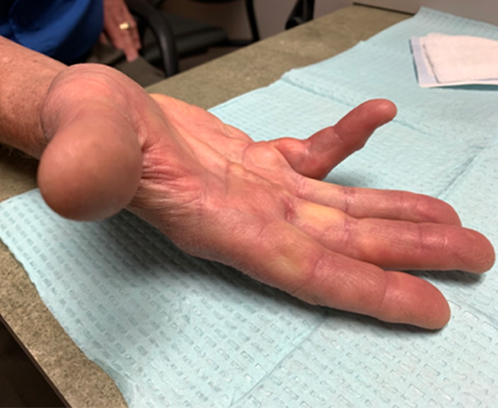
Dupuytren's disease is an abnormal thickening of the fascia, the tissue just beneath the skin of the palm. It often starts with firm lumps in the palm. Gradually, these lumps may grow into firm cords stretching from the palm into the fingers, potentially causing the fingers to bend into the palm. While the cause of Dupuytren's disease is unknown, it's more common in men over age 40 and in people of Northern European descent.
Symptoms of Dupuytren's disease usually include a small lump or series of lumps and pits within the palm, which are generally firm and adherent to the skin. Over time, a cord may develop, extending from the palm into one or more fingers, with the ring and little fingers most commonly affected. The disease may first be noticed due to difficulty placing the hand flat on an even surface, such as a tabletop. As the fingers are drawn into the palm, you may notice increasing difficulty with activities such as washing, wearing gloves, shaking hands, and putting hands into pockets.
Despite the potentially alarming presentation, Dupuytren's disease and similar conditions like palmar fibromatosis are typically not painful. If you're experiencing hand pain associated with palmar nodules or thickening of the palmar fascia, it may be due to an underlying condition such as a trigger finger. Dr. Raven is experienced in differentiating between these conditions and will guide you towards the appropriate treatment.
Dupuytren's Disease vs. Non-Progressive Palmar Fibromatosis
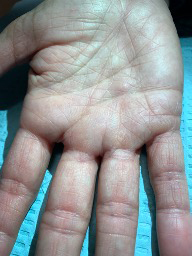
Not all lumps or thickenings in the palm are indicative of Dupuytren's disease. Many patients come to our office concerned that a palm lump means their fingers will eventually curl inward. In most cases, that concern is unwarranted.
A condition we refer to as non-progressive palmar fibromatosis also presents with firm nodules in the palm that can look and feel identical to early Dupuytren's disease. However, it behaves very differently. Unlike classic Dupuytren's disease, non-progressive palmar fibromatosis:
- Is often unilateral (affecting only one hand)
- Occurs in patients with no family history of Dupuytren's disease
- Affects women as often as men
- Is not associated with ectopic manifestations (knuckle pads, Ledderhose disease, or Peyronie's disease)
- Does not progress to cords or finger contractures
In Dr. Raven's clinical experience, this type of palmar nodule is commonly seen in people who do heavy manual work, lift weights without padded gloves, or have had a prior injury to the hand, wrist, or arm on the same side. Rather than being driven by genetics, these nodules appear to result from repetitive stress or microtrauma to the palmar fascia — a reactive process rather than a progressive disease.
Research supports this clinical observation. Studies following patients with isolated palmar nodules for nearly nine years have shown that only about 1 in 12 developed enough contracture to require surgery, and some nodules actually disappeared on their own. A large population-based study found that only about 1 in 5 patients with early-stage disease showed any progression over seven years — and the patients who did progress were those with a family history and ectopic manifestations. Patients without those features had very low rates of progression.
The Role of Ultrasound
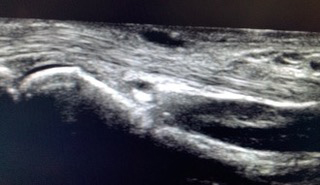
An ultrasound of the palm is a quick, painless way to evaluate a palmar lump. It can help determine whether the lump is a solid nodule or a small fluid-filled cyst within the palmar fascia. A palmar fascial cyst is typically caused by small tears in the fascia from repetitive use or injury and is not Dupuytren's disease. Dr. Raven uses ultrasound to help characterize these lesions and guide patient counseling.
How Do You Know If Your Nodule Will Progress?
The patients most likely to experience progression are those with features of Dupuytren's diathesis (described below). If you have a single, stable lump in one palm, no family history, and none of the features listed below, you can be reassured that progression to finger contractures is very unlikely.
You should follow up if:
- You cannot lay your hand flat on a table (the "tabletop test")
- A finger is starting to bend and you cannot fully straighten it
- The lump is growing, painful, or interfering with hand function
- You develop similar lumps on the other hand, on the soles of your feet, or on your knuckles
Understanding Dupuytren's Diathesis
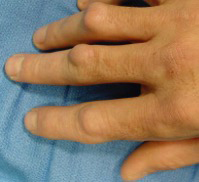
Another important aspect in the spectrum of Dupuytren's disease is Dupuytren's diathesis. The term "diathesis" is a medical term meaning tendency toward a condition. When applied to Dupuytren's, it describes a tendency towards a more aggressive form of the disease. This translates to faster progression and more recurrence after treatment. The hallmark of Dupuytren's diathesis is having several of the following risk factors:
- Early age of onset
- Involvement of more fingers
- Bilateral occurrences (both hands affected)
- A family history of Dupuytren's disease
- Knuckle pads
- Ledderhose disease (involving the feet)
- Peyronie's disease (penile fibromatosis)
- Frozen shoulder
This more aggressive biology also implies that people with Dupuytren's diathesis are more likely to have ancestors with Dupuytren's and are more likely to pass Dupuytren's on to their children than people with only Dupuytren's. It highlights the importance of accurate diagnosis and tailored treatment strategies in these cases.
Interesting Fact: A Disease Inherited From Neanderthals
Dupuytren's disease has long been recognized as more common in people of Northern European descent, but scientists have recently discovered a remarkable reason why. A 2023 study published in the journal Molecular Biology and Evolution found that three of the strongest genetic risk factors for Dupuytren's disease were inherited from Neanderthals, our ancient relatives who interbred with modern humans tens of thousands of years ago. The second and third most powerful genetic variants linked to Dupuytren's disease are of Neanderthal origin, and the strongest of these affects a gene called EPDR1. Because people of African ancestry carry little to no Neanderthal DNA, this helps explain why Dupuytren's disease is common in Northern Europe, where up to 30% of men over 60 are affected, but rare in people of African descent. In other words, if you have Dupuytren's disease, you may have your Neanderthal ancestors to thank. This discovery is a striking example of how interbreeding between ancient human species continues to shape our health today.
Treatment Options
It is crucial to understand that the presence of a lump in the palm doesn't necessarily mean that treatment is required or that the disease will progress. For patients with non-progressive palmar fibromatosis, observation alone is appropriate, and wearing padded gloves during manual work or weightlifting may help prevent further irritation.
Treatment is indicated if and when a contracture develops that causes a functional deficit. Patients with advanced contractures may be candidates for various procedures:
- Radiotherapy
- Percutaneous Needle Aponeurotomy (NA)
- Collagenase (XIAFLEX®) injections
- Surgical Fasciectomy
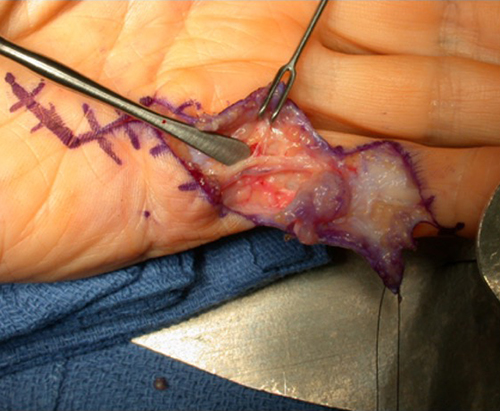
Dr. Raven has extensive clinical and surgical experience in the treatment options currently available for Dupuytren's Disease: XIAFLEX (collagenase clostridium histolyticum)® injection therapy, needle aponeurotomy, and surgical fasciectomy. Prior to March 1, 2010, Dr. Raven was the only hand surgeon in California experienced in all three methods of treating Dupuytren's disease. As a principal investigator during Phase II clinical trials, Dr. Raven gained early clinical experience using XIAFLEX®, treating 31 patients with the drug before it was commercially available.
Dr. Kulber brings additional expertise in advanced surgical techniques for Dupuytren's disease, including the use of acellular dermal matrix (a biologic tissue substitute) placed at the surgical site after fasciectomy to help reduce the risk of disease recurrence — one of the biggest challenges in Dupuytren's surgery. Dr. Kulber has also published expert commentary on clinical trials comparing collagenase injection and needle fasciotomy, contributing to the evidence base that guides treatment decisions at the center.
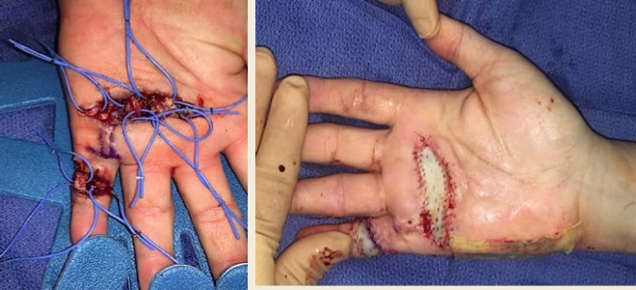
The method most appropriate for your condition will be chosen based on the stage of the disease and the joints involved, with the aim to improve finger position and thereby hand function.
Specific Treatment Considerations
- The presence of a lump in the palm does not mean that treatment is required or that the disease will progress.
- Correction of finger position is best accomplished with milder contractures and contractures that affect the base of the finger. Complete correction sometimes cannot be attained, especially of the middle and end joints in the finger.
- Skin grafts are sometimes required to cover open areas in the fingers if the skin is deficient.
- The nerves that provide feeling to the fingertips are often intertwined with the cords.
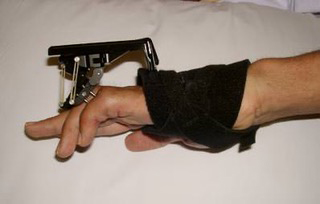
- Severe contractures may need to be treated with an external apparatus, such as the Digit Widget, which is used to slowly correct the deformity over a period of 6 to 12 weeks.
- Splinting and hand therapy are often required after surgery in order to maximize and maintain the improvement in finger position and function.
To learn more, schedule a consultation with Dr. Raven or Dr. Kulber.
Recommended Reading and References
The following references are provided for patients who wish to learn more about Dupuytren's disease, non-progressive palmar fibromatosis, and available treatment options. These are drawn from peer-reviewed medical journals and trusted medical resources.
Understanding Non-Progressive Palmar Fibromatosis
- Rayan GM, Moore J. Non-Dupuytren's Disease of the Palmar Fascia. Journal of Hand Surgery (American Volume). 2005;30(3):551–556.
This is the landmark paper describing palmar fascial disease that is clinically distinct from classic Dupuytren's disease. It describes patients with palmar nodules related to trauma, manual labor, or other non-genetic causes who do not follow the progressive course of hereditary Dupuytren's disease.
- Reilly RM, Stern PJ, Goldfarb CA. A Retrospective Review of the Management of Dupuytren's Nodules. Journal of Hand Surgery (American Volume). 2005;30(5):1072–1078.
This study followed 59 patients with isolated Dupuytren's nodules for an average of nearly 9 years. Only about 1 in 12 progressed to contracture requiring surgery, and some nodules resolved completely — reassuring evidence for patients with nodules only.
- van den Berge BA, Werker PMN, Broekstra DC. Limited Progression of Subclinical Dupuytren's Disease. The Bone & Joint Journal. 2021;103-B(4):704–710.
A population-based study of nearly 400 participants showing that only about 1 in 5 patients with early Dupuytren's disease progressed over 7 years. Family history and ectopic lesions (lumps on the feet or knuckle pads) were the only factors that predicted progression.
Understanding Dupuytren's Disease
- Shih B, Bayat A. Scientific Understanding and Clinical Management of Dupuytren Disease. Nature Reviews Rheumatology. 2010;6(12):715–726.
A comprehensive review of the science behind Dupuytren's disease, including risk factors, what causes the disease at a cellular level, and an overview of treatment options.
- Ruettermann M, Hermann RM, Khatib-Chahidi K, Werker PMN. Dupuytren's Disease — Etiology and Treatment. Deutsches Ärzteblatt International. 2021;118(46):781–788.
An accessible overview of Dupuytren's disease covering causes, how common it is, and all current treatment options including surgery, needle procedures, enzyme injections, and radiotherapy.
- Ågren R, Patil S, Zhou X, et al. Major Genetic Risk Factors for Dupuytren's Disease Are Inherited From Neandertals. Molecular Biology and Evolution. 2023.
A groundbreaking study that discovered three of the strongest genetic risk factors for Dupuytren's disease were inherited from Neanderthals tens of thousands of years ago. This helps explain why the condition is so common in people of Northern European descent and rare in people of African ancestry.
- Riesmeijer SA, Werker PMN, Nolte IM. Ethnic Differences in Prevalence of Dupuytren Disease Can Partly Be Explained by Known Genetic Risk Variants. European Journal of Human Genetics. 2019.
A study showing that known genetic risk variants account for a significant portion of the differences in Dupuytren's disease rates across ethnic groups, supporting the role of inherited genetics in determining who develops the condition.
Treatment Options — Collagenase (XIAFLEX®)
- Hurst LC, Badalamente MA, Hentz VR, Raven RB, et al. Injectable Collagenase Clostridium Histolyticum for Dupuytren's Contracture. The New England Journal of Medicine. 2009;361(10):968–979.
The landmark clinical trial that led to FDA approval of XIAFLEX® (collagenase) for Dupuytren's contracture. This multicenter study showed that collagenase injection significantly improved finger contracture compared to placebo. Dr. Raven was a study investigator and one of the first surgeons in California to gain clinical experience with the drug.
- Badalamente MA, Hurst LC, et al. Efficacy and Safety of Injectable Mixed Collagenase Subtypes in the Treatment of Dupuytren's Contracture. Journal of Hand Surgery (American Volume). 2007;32(6):767–774.
The Phase II clinical trial that first demonstrated collagenase injection was a safe and effective treatment for Dupuytren's contracture, paving the way for the larger Phase III trial above. Dr. Raven served as a principal investigator, treating 31 patients with the drug before it was commercially available.
- Raven R, Kushner H, Nguyen D, Naam N, Curtin C. Analysis of Efficacy and Safety of Treatment With Collagenase Clostridium Histolyticum Among Subgroups of Patients With Dupuytren Contracture. Annals of Plastic Surgery. 2014;73(3):286–290.
A study led by Dr. Raven examining how well collagenase injection works across different patient groups — including differences by age, gender, severity, and which joints are affected. This helps patients understand how their individual characteristics may influence treatment outcomes.
Comparing Treatment Options
- Dias J, et al. Collagenase Injection Versus Limited Fasciectomy for Dupuytren's Contracture. The New England Journal of Medicine. 2024;391(17):1611–1621.
The DISC trial — a major study comparing XIAFLEX® (collagenase) injection to surgery for moderate Dupuytren's contracture. This study helps patients understand the trade-offs between a less invasive injection and a more durable surgical procedure.
- Räisänen MP, et al. Surgery, Needle Fasciotomy, or Collagenase Injection for Dupuytren Contracture: A Randomized Controlled Trial. Annals of Internal Medicine. 2024;177(3):307–316.
A Finnish trial comparing all three major treatment options head-to-head. At 3 months, all treatments worked equally well. At 2 years, surgery maintained better results than needle fasciotomy or collagenase injection.
- McCullough M, Kulber DA. Discussion: Three-Year Recurrence of Dupuytren Contracture after Needle Fasciotomy or Collagenase Injection: A Randomized Controlled Trial. Plastic and Reconstructive Surgery. 2023;151(2):372–373.
An expert commentary by Dr. Kulber on a clinical trial comparing recurrence rates between needle fasciotomy and collagenase injection at three years, providing additional clinical perspective on choosing between these two minimally invasive treatment options.
- Shaheen MS, et al. Effectiveness and Safety of Dupuytren Contracture Treatments: A Systematic Review and Meta-Analysis. Plastic and Reconstructive Surgery. 2024;154(4):697e–710e.
A comprehensive analysis pooling data from multiple studies. All three treatments provided similar contracture correction, but surgery had the lowest recurrence rate, while needle fasciotomy had the fewest serious complications.
- van den Berge BA, et al. Outcomes of Limited Fasciectomy, Needle Fasciotomy and Collagenase Injection for Dupuytren's Disease: A Systematic Review and Meta-Analysis of Individual Patient Data. Journal of Hand Surgery (European Volume). 2025;50(7):735–745.
The most recent meta-analysis confirming that all three treatments provide comparable contracture correction, but surgery offers the longest time before recurrence.
Treatment Options — Surgical Fasciectomy and Advanced Techniques
- Ellis CV, Kulber DA. Acellular Dermal Matrices in Hand Reconstruction. Plastic and Reconstructive Surgery. 2012;130(5 Suppl 2):256S–269S.
A comprehensive review of the use of acellular dermal matrix (a biologic tissue substitute) in hand and wrist reconstruction. This paper explores how these materials can be used to improve surgical outcomes and reduce the need for additional tissue grafts.
- Hoang D, Steven P, Chen VW, Stasiak A, Cohen M, Kulber DA. Use of Acellular Dermal Matrix Following Fasciectomy for the Treatment of Dupuytren's Disease. Plastic and Reconstructive Surgery Global Open. 2019;7(5):e2263.
A study by Dr. Kulber's team investigating whether placing a biologic tissue substitute (acellular dermal matrix) into the surgical site after Dupuytren's fasciectomy can reduce the chance of the disease coming back. This innovative approach aims to address one of the biggest challenges in Dupuytren's surgery — recurrence.
Radiotherapy for Early Disease
- Eberlein B, Biedermann T. To Remember: Radiotherapy — A Successful Treatment for Early Dupuytren's Disease. Journal of the European Academy of Dermatology and Venereology. 2016;30(10):1694–1699.
A review of radiotherapy for early-stage Dupuytren's disease showing that radiation can prevent progression in the majority of patients with early nodules and cords, with minimal side effects.
- Martin JM, et al. Toxicities and Quality of Life Following Observation or Radiation Therapy for Dupuytren's Disease: Three Year Data From the DEPART Randomized Trial. International Journal of Radiation Oncology, Biology, Physics. 2025.
Results from the first major randomized trial of radiotherapy for Dupuytren's disease, showing that treatment is well-tolerated with minimal side effects and may improve quality of life compared to observation alone.
Ultrasound Imaging of Palmar Nodules
- Morris G, et al. Ultrasound Features of Palmar Fibromatosis or Dupuytren Contracture. Journal of Ultrasound in Medicine. 2019;38(7):1891–1898.
This study describes what Dupuytren's nodules look like on ultrasound and how imaging can help distinguish different types of palmar lumps.
The Role of Trauma and Mechanical Stress
- Novo J, et al. Incidence of Dupuytren's Disease Following Hand Trauma: A Systematic Review. Journal of Hand Surgery (European Volume). 2025.
A systematic review confirming that hand trauma — including surgery and repetitive mechanical stress — is an established risk factor for developing palmar fibromatosis.
- Haines A, et al. Dupuytren's Contracture and Handwork: A Case-Control Study. American Journal of Industrial Medicine. 2017;60(8):691–700.
A study examining the relationship between manual labor, occupational hand use, and the development of Dupuytren's contracture.
Patient Organizations
International Dupuytren Society (dupuytren-online.info)
A nonprofit organization providing patient education, research updates, and support for people with Dupuytren's disease and related conditions.
Dupuytren Research Group (dupuytrens.org)
A patient-centered resource offering information about the disease, treatment options, and ongoing clinical trials.
To learn more, schedule a consultation with Dr. Raven.