
Bone Fractures
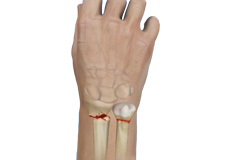
Complex Wrist & Hand Fractures
Complex wrist and hand fractures are high energy injuries of the wrist and hand with articular disruption, ligament injuries, neuromuscular instability and soft tissue injuries.
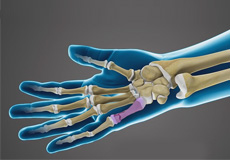
Finger Fractures
A fracture is a break in the bone, which occurs when force greater than the bearable limit is applied against a bone. The most common symptoms of any fracture include severe pain, swelling, bruising or bleeding, deformity and discoloration of the skin and limited mobility of the hand.
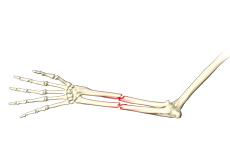
Adult Forearm Fractures
The forearm is made up of 2 bones, namely, the radius and ulna. The primary function of your forearm is rotation i.e., the ability to turn your palm up and down.
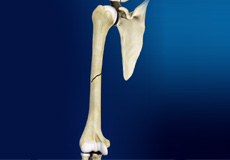
Mid-Shaft Humerus Fracture
A mid-shaft humerus fracture is a common type of humerus fracture that occurs along the mid-section of the humerus or upper arm bone.
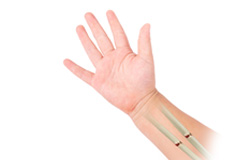
Forearm Fractures in Children
The radius (bone on the thumb side) and ulna (bone on the little-finger side) are the two bones of the forearm. Forearm fractures can occur near the wrist, near the elbow or in the middle of the forearm.
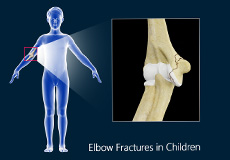
Elbow Fractures in Children
Fractures are more common in children due to their physical activities as well as their bone properties. An elbow fracture most commonly occurs when your child falls on an outstretched arm.
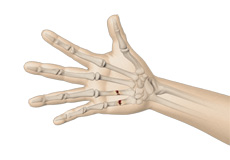
Hand Fractures
A fracture is a break in the bone, which occurs when force greater than the bearable limit is applied against a bone. The most common symptoms of any fracture include severe pain, swelling, bruising or bleeding, deformity and discoloration of the skin and limited mobility of the hand.
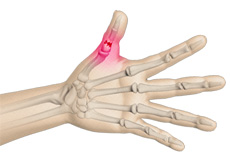
Thumb Fractures
A break or a crack in the bones of the thumb is known as a thumb fracture. Fractures may occur anywhere on the thumb, but a fracture at the base of the thumb, near the wrist, is considered the most serious.
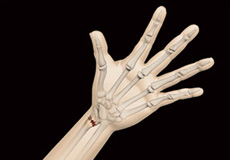
Distal Radius Fracture
The forearm consists of two bones, the radius, and ulna. The radius is the larger of the two forearm bones. The region towards the wrist is called the distal end. Fractures in this end are most common.
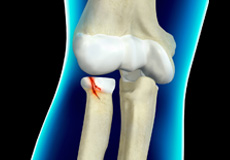
Radial Head Fractures
Radial head fractures are very common and occur in almost 20% of acute elbow injuries. Elbow dislocations are generally associated with radial head fractures.
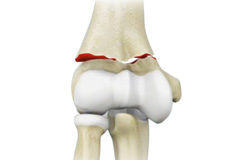
Elbow Fractures
Elbow fractures may occur from trauma, resulting from various reasons: a fall on an outstretched arm, a direct blow to the elbow or an abnormal twist to the joint beyond its functional limit.
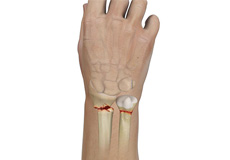
Wrist Fracture
The wrist is comprised of two bones in the forearm, the radius and ulna, and eight tiny carpal bones in the palm. The bones meet to form multiple large and small joints. A wrist fracture refers to a break in one or more of these bones.
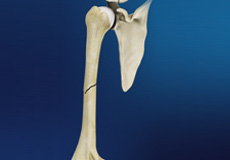
Mid Humeral Fracture
The upper arm is made up of the humerus bone. The head of the humerus fits into a shallow socket in your scapula (shoulder blade) to form the shoulder joint.
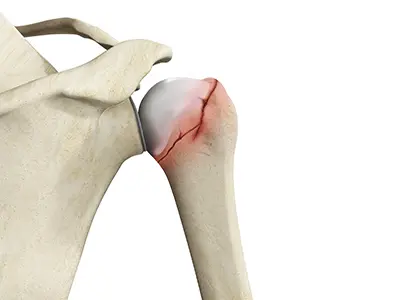
Shoulder Fracture
A break in a bone that makes up the shoulder joint is called a shoulder fracture.
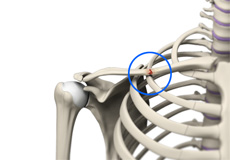
Clavicle Fracture
The break or fracture of the clavicle (collarbone) is a common sports injury associated with contact sports such as football and martial arts, as well as impact sports such as motor racing.
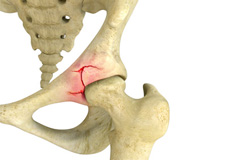
Hip Fracture
A hip fracture is a break that occurs near the hip in the upper part of the femur or thighbone. The thighbone has two bony processes on the upper part - the greater and lesser trochanters.
Femur Fracture
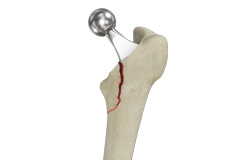
The femur or thigh bone is the longest and strongest bone in the body, connecting the hip to the knee. A femur fracture is a break in the femur.
Fractures of the Tibia
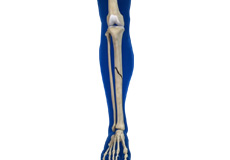
The lower leg is made up of two long bones called the tibia and fibula that extend between the knee and ankle. The tibia or shinbone is the larger of the two bones. It bears most of the body’s weight and helps form the ankle joint and knee joint.